From Rights to Reality: Rewriting the Story of Young Women’s Leadership at the World YWCA
Supported historically by the YWCA World Service Council, the World YWCA 2025 Leadership Cohort is a six‑month, paid, hands-on internship that brings together young women leaders from across the global YWCA movement to work closely with the World YWCA team.
Cohort members contribute directly to global fundraising and leadership strategies, gain practical experience in resource mobilisation and feminist research, and engage in hybrid work that connects their local YWCA contexts with global advocacy spaces, such as the UN Commission on the Status of Women.
We’re Olayinka Sarah Oladipo and Lushomo Thebe, and this International Women’s Day, we’re pausing between Zoom calls, funding decks, and Google Docs to take a deep breath and ask: what does it really mean to lead as young feminist activists inside a 170-year-old global movement of women? In this new blog – written in our own words, we share our insights from our day-to-day and overall experience as part of a team of global activists focused on equity, peace, and justice for women, young women, and girls everywhere.
“Hi, we’re two-thirds of the 2025 Leadership Cohort…”
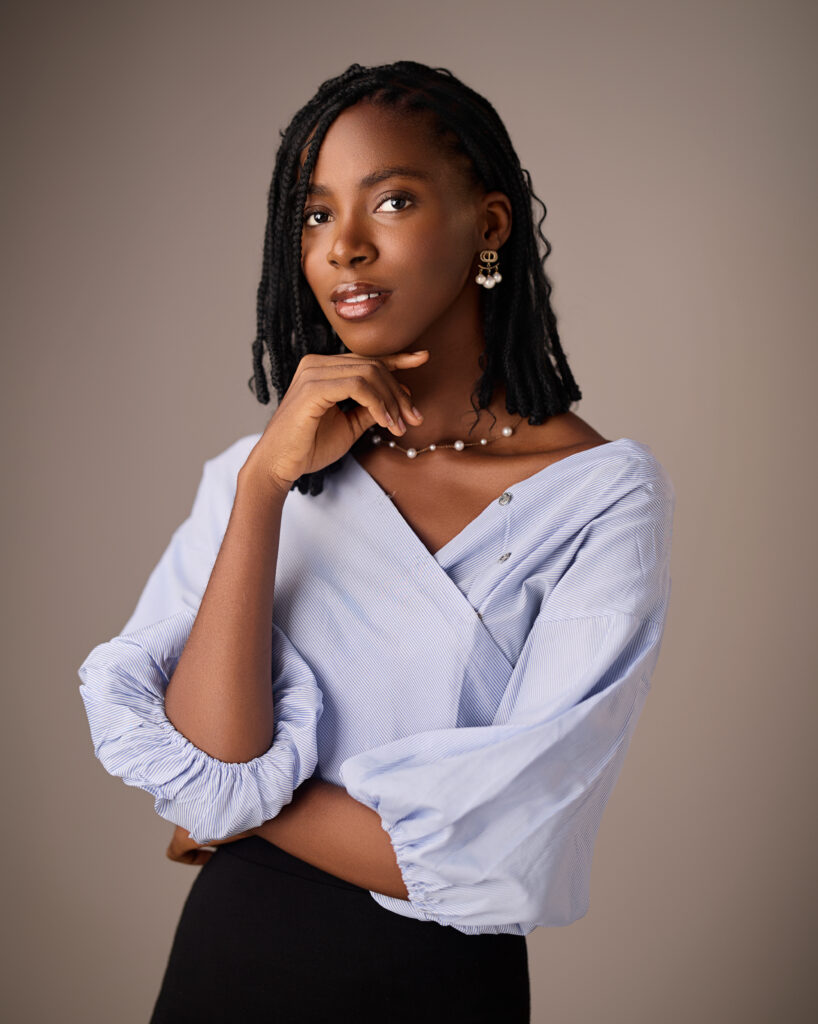
Olayinka here: I’m a Lagos-based medical practitioner-in-training, TEDx speaker, and founder of a global impact initiative working on systems that advance the Sustainable Development Goals. I joined the World YWCA 2025 Leadership Cohort because I believe gender justice is built where bold youth leadership, structured partnerships, and faith-rooted action meet.
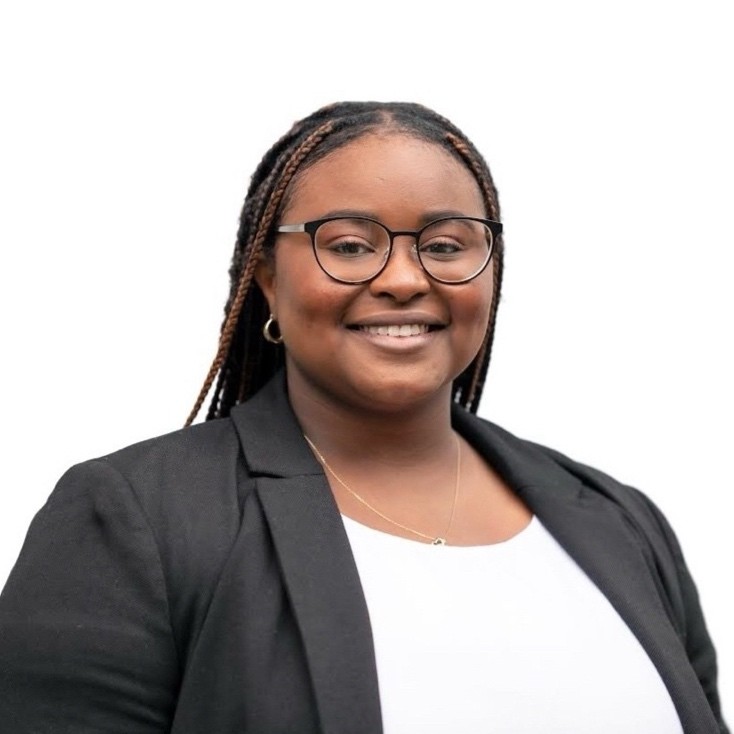
And I’m Lushomo: a Zambian-Kiwi lawyer in Aotearoa New Zealand, moving between corporate, tech and governance spaces while serving on the board of YWCA Aotearoa New Zealand. I applied for the 2025 Leadership Cohort because I’ve seen how representation, resourcing, and storytelling can shift what’s “normal” for women. I wanted to root that work in a global, intergenerational feminist movement.
Together, with our third member Gabrielle Bailey from YWCA Central Maine, who is currently taking some personal time, we as the 2025 Leadership Cohort have spent the last couple of months working within the World YWCA and broader YWCA ecosystem, learning how a global movement translates big words like “rights, justice, action” into actual budgets, programmes, safe spaces and accountability.
Intergenerational leadership, but make it real.
If “intergenerational leadership” sounds like a buzzword to you, we get it. For us, it has looked like WhatsApp voice notes across time zones, mentors who send both track changes and prayers, and being trusted to lead work that matters—not just writing minutes.
Olayinka: Before this cohort, I’d heard horror stories about line managers. Then I met Hana, the World YWCA’s Fundraising Senior Specialist and our lead focal. Watching her lead with kindness, clarity, and uncompromising excellence shifted my entire idea of women’s leadership: she navigates complex advocacy timelines, cross-country coordination and high-stakes spaces while staying deeply human in every email and meeting.
That intergenerational mentorship taught me that leadership isn’t about performing authority; it’s about centring humane connection in how we make decisions, manage conflict and design structures.
Lushomo: On my side, working with senior colleagues on movement fundraising showed me that sustainability is a love language. I learnt how to build a strengths-based picture of national YWCA capacity using existing internal tools, identify data gaps without shaming anyone, and turn all of that into clear, fundable priorities.
It sounds technical, but it’s actually about trust: being careful with people’s stories, and making sure our need for resources never becomes extractive.
What we’re giving back to the movement.
Yes, we are learning a lot. But we are also bringing a lot with us.
Olayinka: My brain naturally asks, “What system is missing here?”
Whether I’m designing a conference or a consultation, I’m thinking about sustainability, measurability and scalability: what needs to exist so that the work doesn’t depend on one charismatic leader, one funder, or one moment in the news cycle.
I bring digital fluency, systems thinking, and a bold urgency that looks patriarchy in the face and says, “No, actually.”
Through this cohort, I’ve been leading the workstream for a global conference for women that is intentionally more than an event; it’s a movement architecture that connects strategists, funders, and grassroots leaders in the same rooms with the same power to shape the agenda.
Alongside that, I’m co-leading a research initiative using Feminist Consultation Methodology (FCM) to strengthen the internal systems of the Leadership Cohort itself—because even feminist programmes need feminist structures.
Lushomo: I like to say I’m a bridge.
My legal training means I think in clauses and consequences, which is surprisingly useful when you’re looking at grant proposals, governance structures, or databases that haven’t been updated since “pre-pandemic” was a thing.
In the fundraising workstream, I’ve supported early development of a multi-foundation proposal focused on organisational resilience across national YWCAs, working through internal tools, spotting inconsistencies, and feeding into a collaborative “snapshot” of the movement that’s useful for strategy.
I’ve also worked with the cohort to review past Leadership Cohorts: gathering history, tracking trends, and contributing to thinking on a monitoring, evaluation, and learning framework and an alum tracking system that can track impact beyond one internship cycle. For me, this is where feminist leadership meets spreadsheets: using evidence to ensure women’s rights are not just affirmed but resourced and measured.
The not-so-Instagrammable parts: challenges we’re facing.
Let’s be honest: feminist leadership is not a highlight reel.
Olayinka: My recurring challenge has been balancing urgency with sustainability.
When you’re working on gender justice, and you see the violence, exclusion, and inequality up close, you want everything to change yesterday—but you also need teams that can breathe, structures that can hold the work, and a movement that can still exist ten years from now.
Intergenerational support helped me stop transferring pressure and start transferring vision: creating space for others to see themselves in the mission instead of just asking them to run at my pace.
Lushomo: My recurring challenge has been entering spaces where young women are clearly welcome for the photo, but not necessarily for the vote.
I’ve had to respond by being prepared and specific— bringing concrete proposals, asking direct questions about where decisions are actually made, and building relationships that slowly turn “input” into shared power.
It’s tiring work, but every time an older leader looks back at you and says, “Okay, then how do you suggest we do this?” you feel the ground shift a little.
Our vision for girls we may never meet, and yet we envision a shared future.
When we think about rights, justice and action, we’re not thinking in slogans.
Olayinka: The future I’m working toward is one where gender justice is woven into institutions, communities and consciousness, not just conference declarations.
That looks like strong systems, yes, but also strong convictions; a world where equality is not debated, but demonstrated in who has access, who gets to rest, and who is truly safe.
For me, moving from rights to reality means building and strengthening platforms where women’s lived experiences shape policy, funding, and implementation—not just advocacy talking points.
Lushomo: The future I’m working toward is one where equity is measurable and non-negotiable, and where young women are trusted to shape agendas, not only decorate them.
I want to keep working on the bridge between storytelling and systems: helping translate women’s realities into fundable priorities, governance decisions, and accountable delivery.
That looks like donor engagement with both strong narratives and robust structures, and like advocating for clear power-sharing pathways so young women are not just “consulted” but co-leading.
An International Women’s Day love letter (and challenge) to you.
This International Women’s Day, we’re holding both the ache and the hope.
We see a world where women, young women and girls still face violence, exclusion, unsafe digital spaces, and economic injustice— even while laws and policies claim equality.
But we also see the quiet miracles: young women running community workshops, mentors rewriting meeting agendas to include us, donors open to new ways of funding, and boards willing to ask hard questions and stay in the discomfort.
From our corner of the World YWCA movement, our message to other young women is this: don’t wait to be “ready” or to be handed a microphone.
Your lived experience is expertise, and it belongs in rooms where strategies, budgets and laws are shaped.
Build across generations. Ask the uncomfortable questions. Say “no” to tokenism and “yes” to shared power.
And when the work feels heavy, remember we are not just commemorating International Women’s Day— we’re co-writing the story of what happens next.
Thank you for reading!
- Olayinka and Lushomo