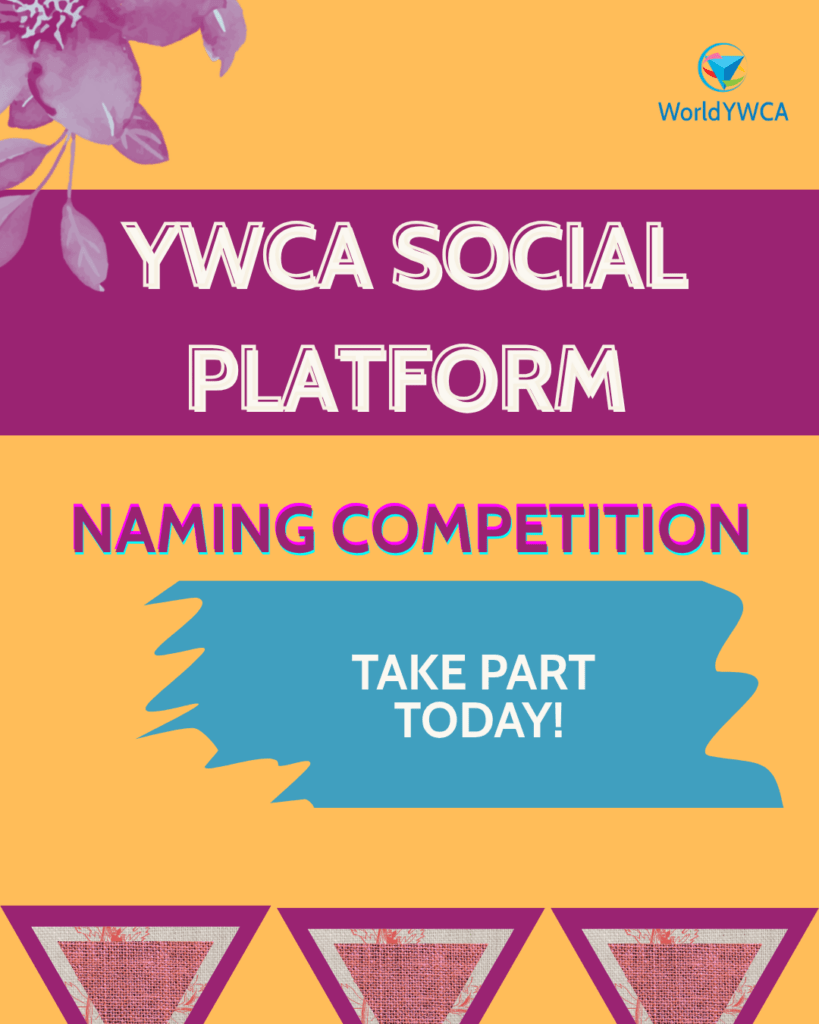
As we celebrate World YWCA Day 2026, we invite you to help shape the future of our shared digital community. As part of building stronger virtual spaces for our global movement to connect, engage, and co-create, we are thrilled to open the YWCA Social platform naming competition!
The World YWCA has recently refreshed and rebranded its social platform, envisioned as our movement’s digital home — a place where we can come together, share, learn, and work side by side on our shared mission. This space is created for our community, and now we would love for you to help us name it.
In the true spirit of co-creation, we are asking you to help us find a bold, inspiring name for the YWCA Social platform—one that reflects who we are today and where this vibrant community is going.
How to participate
It’s simple! Think of your best name idea and share your submission. Each participant is invited to submit one name, and you are welcome to include a short explanation of the idea, meaning, or story behind the name you chose.
Deadline: 22 May 2026
This competition, open to everyone in the World YWCA movement and beyond, is a chance to help shape a shared digital home that reflects the movement’s identity, diversity, and future.
A winner will be announced in June 2026, and the selected name will be used across the platform as it continues to grow and evolve with our community.
War in Lebanon again. The people dying are civilians.
For six weeks, a war launched by Israel has killed over 2,000 people. Wounded more than 7,000. Driven more than 1 million from their homes. Bridges are destroyed. Hospitals have been overloaded. Schools are shelters now. And none of this is happening to a country that had anything left to give. Lebanon was already gutted by economic collapse, by displacement, by the port explosion, by the earlier war, and by the ongoing conflict in the Middle East. War is never abstract for World YWCA. We have team members in Lebanon. We have a community there. These are people we know. Colleagues, friends, women whose ordinary Monday morning turned into something chaotic with the relentless bombing of civilian spaces. This means lost family and friends, lost homes and means of livelihood, disrupted or absent YWCA community services, and limited freedom of movement.
A recent email from a YWCA leader in Lebanon said, “Today, one of the first bombs was 100 meters away from our YWCA office, and we were all there, the hostel residents and the building staff.”
This chaos is a weight that will not change for a long time. As always, such weight is heaviest for women and is carried the longest by women.
They are in overcrowded shelters, informal housing, arrangements no one would call safe. What is left is the work of keeping children alive, of managing trauma without help, of surviving conditions so reduced that the word “life” barely applies anymore. For adolescent girls, it gets worse – harassment, exploitation, violence that thrives exactly when the structures meant to prevent it disappear.
Mona Khauli, National Executive Director of YWCA Lebanon, asks, “How many times must our country pay for the insane actions of leaders who are steering world politics?” Indeed, power structures – often a very small handful of people – devastate entire communities and generations.
YWCA leaders have borne witness to this for centuries. In theory, so has the international community.
Yet, the international community keeps performing the same strange ritual: expressing concern while supplying the means. Governments arm, fund, and provide political cover for this. They hand someone a match and then share platitudes of heartbreak about the fire.
YWCA Lebanon and World YWCA call for adherence to the announced ceasefire, not select adherence or a subjective interpretation, but immediate, and then sustained ceasefire:
We call for the protection of civilians and civilian infrastructure. This is not a radical demand; it is what international humanitarian law already requires.
We call for adequate, accessible humanitarian access. This includes reproductive healthcare, mental health services, and support for survivors of gender-based violence.
We call for an end to forced displacement and the varied manifestations of collective punishment.
We call for an end to the Israeli occupation of south Lebanon and safeguarding of Lebanon’s sovereignty over its land and resources.
And we call for full accountability. For those who did this, and for those who made it possible – in court and within the systems of justice. Words are not enough from people who pull the levers in a power structure.
For more than 160 years, the global YWCA movement has defended human rights, rejected violence, and acted toward just peace. At the 30th World YWCA Council in November 2023, the highest decision-making body of the global YWCA movement, adopted a resolution to promote human rights and support the Middle East region’s movements work towards sustainability.
We ask you to demand dignity, justice, and accountability for all, not just some people.
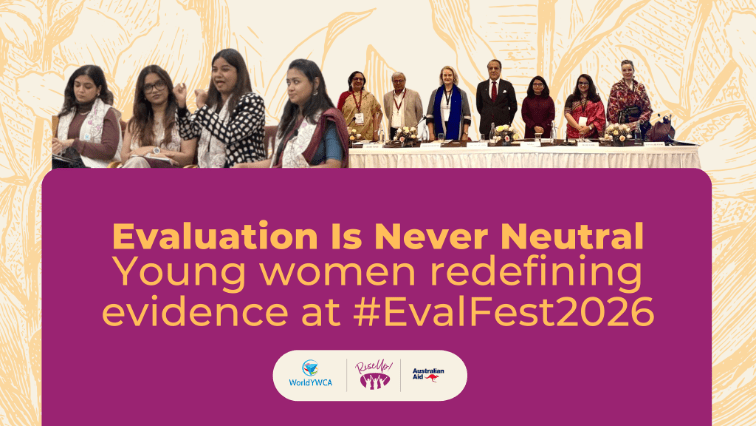
In institutions and organisations, research and evaluation is often framed as technical and value-free. It isn’t. It is a reproduction of systems that have long reproduced extractive, colonial research practices where communities are treated as passive data sources rather than active change agents.
World YWCA’s RiseUp! Young Women’s Leadership and Advocacy Initiative in Asia and the Pacific is redressing this through its Formative Evaluation. Utilising World YWCA’s Feminist Consultation Methodology, young women co-researchers are at the centre of the evaluation – not as program participants, not as expert researchers, but a combination of both. Supported by our innovation partner, the Australian Government Department of Foreign Affairs and Trade, led by Elevating Voices for Change and The Mangrove Collective, we are turning traditional evaluation paradigms into different ways of thinking, doing, and knowing.
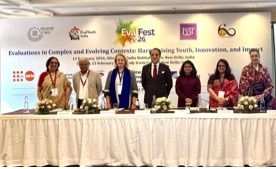
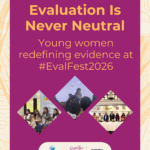
#EvalFest2026 in New Delhi for evaluation in Asia contexts – a biennial conference convened by the Evaluation Community of India and EvalYouth India to explore monitoring and evaluation in complex, evolving contexts provided an excellent opportunity to share the experiences of young women who have put World YWCA’s Feminist Consultation Methodology into action. This year’s theme, “Evaluation in complex and evolving contexts: Harmonising youth, innovation, and impact,” offered the perfect backdrop to centre young women’s authority over evidence. We questioned the idea of neutral data and named how the politics of research decide who holds power, whose stories are heard and who is relegated to the footnotes of their own stories.
For RiseUp!, evaluation is a truth‑telling practice – young women naming, in their own words, what it takes to shift power. As Dr Suchi Gaur, Senior Director of Strategy and Operations at World YWCA, put it: “Evaluation is the discipline that tells us in real time whether we are advancing justice or producing reports.”
The methodology: accountability as a radical act
To move from theory to practice, we need tools that keep power with young women. At EvalFest, young women shared their experiences of World YWCA’s Feminist Consultation Methodology (FCM). The Feminist Consultation Methodology (FCM) is not just a research method. It is a way to democratise how evidence is built. Standard models focus on accountability to donors. FCM shifts accountability to the communities, especially young women, whose work makes change possible. And it includes consent, safety, and data governance – who stores it, who can share it and who decides what is published.
When we get this right, the impact is profound.
The discussion among four young women who have used FCM for very different purposes all said the same thing – this methodology allows us to decolonise the way we have been taught to think about knowledge and power. Vrushali Kadam, Aarushi Khanna, Charu Narang, and Dr Alpaxee Kahyap explored the inherent tensions in community-led accountability.
Vrushali Kadam, queer gender justice researcher, youth advocate, co-creator of Feminist Manch, and Board Member of Chalk Back, reflected on her use of FCM across two projects — Politics4Her Asia’s research on SRHR among queer and marginalised young women, and Feminist Manch’s collective documentation of lived realities of care, safety and access — where women were positioned not as passive respondents but as data sources, analysts and owners.
As one co-researcher said to Vrushali: “This was the first time I was asked to tell my story without being interrupted, judged, or spoken over. That’s what dignity felt like.”
For Vrushali, “the divide between anecdote and legitimacy collapsed once we recognised testimony as empirical description of social systems.” Through Feminist Manch, FCM also structured how the collective built trust and shared authority internally — studying their own participation architecture alongside broader systems. Vrushali left us with three remaining tensions: FCM is slow by design but funding rewards speed; shared politics does not equal equal voice; and donor systems want clean indicators that flatten the layered truth FCM produces — an evidence problem that requires institutions to expand what counts as legitimate data. As bell hooks reminds us, life-transforming ideas come through the voices of women and queers. FCM creates the conditions for those voices to lead. Vrushali left us with a powerful truth – “dignity is a measurable outcome”.
Aarushi Khanna, a young feminist leader, is the Asia Pacific Regional Lead for Equal Measures 2030 and a youth co-creator with Feminist Manch. Drawing on her work with Equal Measures 2030 and Feminist Manch, Aarushi described how FCM enables young women to talk back to the data. For many, this has been the first time they have seen themselves not as survey respondents but as researchers, analysts and strategists.
“FCM did not just surface insights,” Aarushi noted. “It rewrote who owns evidence, who defines priorities and who imagines change.”
To protect what she calls the “dignity of not being interrupted”, Aarushi reminds researchers and practitioners that they must sit with four critical questions:
Who owns this process?
Who benefits from this evidence?
Who gets to define the problem?
Who is missing?
Charu Narang is an activist in the Deaf community, the co-founder of Deaf Women Too and the Associate Manager at Hear A Million (EnAble India). As co-researcher in the RiseUp! Formative Evaluation Charu She spoke about the ongoing access challenges, including the limited availability of ISL interpreters and how Deaf participants sometimes are creatively using tools like ChatGPT to help translate from English and ISL. She also highlighted the diverse stories of Deaf women, showing how their journeys are shaped by multiple identities and experiences. Charu discussed the digital divide, where fewer laptops and limited access to technology—especially in rural areas—create challenges for Deaf women.
Despite this, many women work hard and continue to succeed. She also highlighted how important it is to raise awareness about Sexual and Reproductive Health and Rights (SRHR). By creating safe and trusting spaces through Deaf Women Too, using the Feminist Consultation Methodology (FCM), Deaf women can share and learn in ways that work for them. FCM does more than invite Deaf women to take part. It recognises them as experts who help shape the questions, set the pace, and decide how their stories are recorded.
Charu shared powerful stories of Deaf women who showed courage and resilience. Some challenged dowry practices, some faced resistance from family and community, and others navigated difficult experiences like divorce while standing up for their rights. These stories show that when Deaf women’s agency and expertise are respected, the process leads to richer data and a stronger sense of dignity, solidarity and collective power.
Dr Alpaxee Kashyap is an independent consultant and a founding core member of the Gender Equity Network South Asia(GENSA) and an Evaluation Associate with Elevating Voices for Change. Dr Alpaxe shared that as an Evaluation Navigator for the RiseUp! formative evaluation, accountability was multidimensional and shared — traditional hierarchical roles were intentionally blurred, with co-researchers central to co-designing, implementing and analysing the evaluation. As young women themselves, some also RiseUp! participants, they created the safe environment that the Feminist Consultation Methodology advocates.
Stories invited participants to share what felt most meaningful, with outcomes traced from narratives during analysis rather than imposed through technical language during storytelling. Small moments during the exercise also reflected how power was shared within the process. For instance, when a sticker fell off the chart, participants collectively found creative ways to make it stick again, laughing together as they did so. No single person held authority over where or how the ratings were placed on the matrix. Instead, participants collectively decided how to position their responses. Co-researchers supported the process by explaining each outcome indicator in simple and accessible ways, helping participants think through their responses. Participants were also encouraged to discuss their choices with each other and change their ratings if they wished after these conversations.
Unlike conventional evaluations, FCM ensured power was genuinely shared — accountability emerged as relational, multidimensional and held collectively.
The big picture: Youth authority as the antidote to extraction
In the opening plenary, Dr Suchi Gaur called for the sector to move beyond passive, technical language. The plenary focused on the theme with speakers from UNFPA India and Bhutan Country Office; UN World Food Program, Empower and New Development Bank.
She connected the themes of Youth, Innovation, and Impact into a harmonious bridge by explicitly citing examples from the World YWCA’s work with youth, and by using evaluation and funding frameworks to showcase that walking the talk is not just possible; it must be what we, as practitioners and facilitators, commit to.
RiseUp! is built on a shift: not seeing young people as marginalised, but naming them as systemically excluded. Calling someone ‘marginalised’ frames exclusion as accidental. Naming it as ‘excluded’ makes clear it is a systemic choice that benefits those in power.
Calling for innovation to be seen beyond technology and more aligned with ensuring community and people impacted, including youth, are leading it, is instrumental.
Real innovation in our sector is measured by how much it reduces extraction and restores decision-making power to young women. The key question is simple: Does this process leave the community, especially young women, with more power than before?
Across Asia and the Pacific, RiseUp! young women leaders are combining youth authority, innovation and impact so that those most affected by conflict and injustice can define progress for themselves. By youth authority, we mean young people having real decision-making power over questions, methods, interpretation and how findings are used – not just being consulted. She challenged the audience, especially those designing evaluation work, towards three key asks to be made normal around making evaluation, match complexity:
– Fund evaluation as a learning function across the life of the programme, of innovations, not just at the end.
– Require participatory interpretation and community feedback as quality standards.
– Reward truth-telling: uncertainty, adaptation, and course-correction—not just “success”.
The system shift: Who decides what counts as expertise?
In the plenary discussion Inclusion of Youth and Gender in Evaluation, Victoria Kahla, Programme Manager for RiseUp! in Asia and the Pacific, challenged this pattern: “In a sector grappling with how to decolonise… who decides what rigour means? Who holds expertise? If we do not centre young women in the ecosystem, we are in fact being the opposite of robust.”
RiseUp! Asia Pacific’s monitoring, evaluation, and learning framework was developed by young women. Young women themselves knew that only counting how many people attended an activity, and what percentage say they are more confident after, is not a measure of transformation. They developed a series of progress markers and a very sophisticated matrix for applying these markers to assess progress for individual young women, their peers, families, communities. They didn’t develop this because they are technical experts in evaluation, but because they know that the changes we are trying to measure are complex. They know that not all young women start from the same place, that context is paramount, and transformation does not happen in a straight line.
When rigid frameworks are put above real conditions, we are not being objective. We are silencing those we claim to serve and reinforcing institutional control. World YWCA shifts ownership of evidence by recognising that the most rigorous data comes from those living the reality: young women themselves. We are moving from one-size-fits-all metrics to context-driven processes, where ownership is essential.
The Power Shift
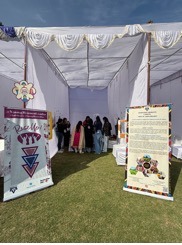
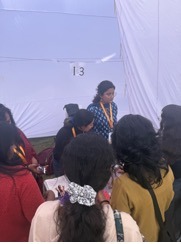
At the EvalFest Innovation Bazaar, young women demonstrated the ‘evidence ecosystem’ in real time: explaining methods, sharing learning and asserting ownership of findings.
Led by YWCA of India, Dhiya Ann Mathew, National General Secretary, Pranita Biswasi, National Advocacy and Programme Manager, and Amanda Fernandes, RiseUp! Young Woman Lead were joined by three young women RiseUp! formative evaluation co-researchers – Sachu R Sunny, Sheetal Kumari, Christymol MA, and Arpita Raj. At the bazar, young people witnessed the work of YWCA of India through RiseUp! By engaging in innovative conversations, games with the team. The booth was full with young people and experts flowing in to know about the work of YWCA of India within the RiseUp! Initiative.
As Sachu reflected on her role as co-researcher, “This experience has reshaped how I listen, interpret, and write about lived experiences in my own academic work. I realize hearing lives through numbers is possible when the quantitative and qualitative approaches are allowed to work together rather than in opposition.”
Beyond the spreadsheet: Towards community‑owned evidence
The RiseUp! Asia Pacific Formative Evaluation is clear: data and evidence are political tools for justice, not just metrics for an end-of-project report.
As #EvalFest2026 closed, young women and their allies called on the global community to treat research as part of building resilient ecosystems that can withstand political, economic and environmental crises. This means resourcing young women to design questions, lead consultations, own findings and bring their evidence into decision-making spaces.
We refuse to accept participation as a substitute for ownership. We choose to legitimise community-led evidence so young women can stand as equals in global governance and peace processes, not as an afterthought or a photo in the annex.
As Victoria Kahla reminds us: “Numbers tell us the extent of change. Stories tell us the quality of the change.” We refuse to turn stories into numbers that fit neatly into a spreadsheet. We choose dignity over extraction.
To our community of activists, evaluators and partners: What do you actively measure in your work? And what is the one thing you absolutely refuse to flatten into a spreadsheet to try and prove your impact?
About the RiseUp! Asia Pacific Formative Evaluation RiseUp! Young Women’s Leadership and Advocacy Initiative in Asia and the Pacific is a flagship initiative of World YWCA, in partnership with the Australian Government Department of Foreign Affairs and Trade. RiseUp! in Asia and the Pacific is led by partners and young women in Bangladesh, India, Myanmar, Nepal, Papua New Guinea, Solomon Islands, Sri Lanka, and Thailand, contributing to World YWCA’s Goal 2035: 100 million young women and girls will transform power structures to create justice, gender equality and a world without violence and war. World YWCA commissioned Elevating Voices for Change and The Mangrove Collective to lead the RiseUp! Asia Pacific Formative Evaluation, co-designed with an intergenerational Steering Committee of RiseUp! Asia Pacific leaders. It is a collaboration grounded in World YWCA’s Feminist Consultation Methodology, ensuring that data collection and sense-making are owned by young women who have participated in RiseUp! These RiseUp! young women co-researchers were coached and supported by Evaluation Navigators in six countries – Bangladesh, India, Myanmar, Nepal, Solomon Islands and Thailand. RiseUp! partners YWCA of Bangladesh, YWCA of India, YWCA of Myanmar, YWCA of Nepal, Hauskuk Initiative PNG, YWCA of Sri Lanka, and YWCA of Thailand have worked with Evaluation Navigators and RiseUp! young women co-researchers to support data collection and sense-making in their RiseUp! communities. This deeply collaborative evaluation is the result of an unwavering commitment to the values and practices of community-led accountability.
Supported historically by the YWCA World Service Council, the World YWCA 2025 Leadership Cohort is a six‑month, paid, hands-on internship that brings together young women leaders from across the global YWCA movement to work closely with the World YWCA team.
Cohort members contribute directly to global fundraising and leadership strategies, gain practical experience in resource mobilisation and feminist research, and engage in hybrid work that connects their local YWCA contexts with global advocacy spaces, such as the UN Commission on the Status of Women.
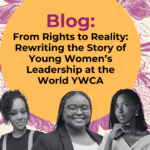
We’re Olayinka Sarah Oladipo and Lushomo Thebe, and this International Women’s Day, we’re pausing between Zoom calls, funding decks, and Google Docs to take a deep breath and ask: what does it really mean to lead as young feminist activists inside a 170-year-old global movement of women? In this new blog – written in our own words, we share our insights from our day-to-day and overall experience as part of a team of global activists focused on equity, peace, and justice for women, young women, and girls everywhere.
“Hi, we’re two-thirds of the 2025 Leadership Cohort…”
Olayinka here: I’m a Lagos-based medical practitioner-in-training, TEDx speaker, and founder of a global impact initiative working on systems that advance the Sustainable Development Goals. I joined the World YWCA 2025 Leadership Cohort because I believe gender justice is built where bold youth leadership, structured partnerships, and faith-rooted action meet.
And I’m Lushomo: a Zambian-Kiwi lawyer in Aotearoa New Zealand, moving between corporate, tech and governance spaces while serving on the board of YWCA Aotearoa New Zealand. I applied for the 2025 Leadership Cohort because I’ve seen how representation, resourcing, and storytelling can shift what’s “normal” for women. I wanted to root that work in a global, intergenerational feminist movement.
Together, with our third member Gabrielle Bailey from YWCA Central Maine, who is currently taking some personal time, we as the 2025 Leadership Cohort have spent the last couple of months working within the World YWCA and broader YWCA ecosystem, learning how a global movement translates big words like “rights, justice, action” into actual budgets, programmes, safe spaces and accountability.
Intergenerational leadership, but make it real.
If “intergenerational leadership” sounds like a buzzword to you, we get it. For us, it has looked like WhatsApp voice notes across time zones, mentors who send both track changes and prayers, and being trusted to lead work that matters—not just writing minutes.
Olayinka: Before this cohort, I’d heard horror stories about line managers. Then I met Hana, the World YWCA’s Fundraising Senior Specialist and our lead focal. Watching her lead with kindness, clarity, and uncompromising excellence shifted my entire idea of women’s leadership: she navigates complex advocacy timelines, cross-country coordination and high-stakes spaces while staying deeply human in every email and meeting.
That intergenerational mentorship taught me that leadership isn’t about performing authority; it’s about centring humane connection in how we make decisions, manage conflict and design structures.
Lushomo: On my side, working with senior colleagues on movement fundraising showed me that sustainability is a love language. I learnt how to build a strengths-based picture of national YWCA capacity using existing internal tools, identify data gaps without shaming anyone, and turn all of that into clear, fundable priorities.
It sounds technical, but it’s actually about trust: being careful with people’s stories, and making sure our need for resources never becomes extractive.
What we’re giving back to the movement.
Yes, we are learning a lot. But we are also bringing a lot with us.
Olayinka:My brain naturally asks, “What system is missing here?”
Whether I’m designing a conference or a consultation, I’m thinking about sustainability, measurability and scalability: what needs to exist so that the work doesn’t depend on one charismatic leader, one funder, or one moment in the news cycle.
I bring digital fluency, systems thinking, and a bold urgency that looks patriarchy in the face and says, “No, actually.”
Through this cohort, I’ve been leading the workstream for a global conference for women that is intentionally more than an event; it’s a movement architecture that connects strategists, funders, and grassroots leaders in the same rooms with the same power to shape the agenda.
Alongside that, I’m co-leading a research initiative using Feminist Consultation Methodology (FCM) to strengthen the internal systems of the Leadership Cohort itself—because even feminist programmes need feminist structures.
Lushomo:I like to say I’m a bridge.
My legal training means I think in clauses and consequences, which is surprisingly useful when you’re looking at grant proposals, governance structures, or databases that haven’t been updated since “pre-pandemic” was a thing.
In the fundraising workstream, I’ve supported early development of a multi-foundation proposal focused on organisational resilience across national YWCAs, working through internal tools, spotting inconsistencies, and feeding into a collaborative “snapshot” of the movement that’s useful for strategy.
I’ve also worked with the cohort to review past Leadership Cohorts: gathering history, tracking trends, and contributing to thinking on a monitoring, evaluation, and learning framework and an alum tracking system that can track impact beyond one internship cycle. For me, this is where feminist leadership meets spreadsheets: using evidence to ensure women’s rights are not just affirmed but resourced and measured.
The not-so-Instagrammable parts: challenges we’re facing.
Let’s be honest: feminist leadership is not a highlight reel.
Olayinka:My recurring challenge has been balancing urgency with sustainability.
When you’re working on gender justice, and you see the violence, exclusion, and inequality up close, you want everything to change yesterday—but you also need teams that can breathe, structures that can hold the work, and a movement that can still exist ten years from now.
Intergenerational support helped me stop transferring pressure and start transferring vision: creating space for others to see themselves in the mission instead of just asking them to run at my pace.
Lushomo:My recurring challenge has been entering spaces where young women are clearly welcome for the photo, but not necessarily for the vote.
I’ve had to respond by being prepared and specific— bringing concrete proposals, asking direct questions about where decisions are actually made, and building relationships that slowly turn “input” into shared power.
It’s tiring work, but every time an older leader looks back at you and says, “Okay, then how do you suggest we do this?” you feel the ground shift a little.
Our vision for girls we may never meet, and yet we envision a shared future.
When we think about rights, justice and action, we’re not thinking in slogans.
Olayinka:The future I’m working toward is one where gender justice is woven into institutions, communities and consciousness, not just conference declarations.
That looks like strong systems, yes, but also strong convictions; a world where equality is not debated, but demonstrated in who has access, who gets to rest, and who is truly safe.
For me, moving from rights to reality means building and strengthening platforms where women’s lived experiences shape policy, funding, and implementation—not just advocacy talking points.
Lushomo:The future I’m working toward is one where equity is measurable and non-negotiable, and where young women are trusted to shape agendas, not only decorate them. I want to keep working on the bridge between storytelling and systems: helping translate women’s realities into fundable priorities, governance decisions, and accountable delivery.
That looks like donor engagement with both strong narratives and robust structures, and like advocating for clear power-sharing pathways so young women are not just “consulted” but co-leading.
An International Women’s Day love letter (and challenge) to you.
This International Women’s Day, we’re holding both the ache and the hope.
We see a world where women, young women and girls still face violence, exclusion, unsafe digital spaces, and economic injustice— even while laws and policies claim equality.
But we also see the quiet miracles: young women running community workshops, mentors rewriting meeting agendas to include us, donors open to new ways of funding, and boards willing to ask hard questions and stay in the discomfort.
From our corner of the World YWCA movement, our message to other young women is this: don’t wait to be “ready” or to be handed a microphone.
Your lived experience is expertise, and it belongs in rooms where strategies, budgets and laws are shaped.
Build across generations. Ask the uncomfortable questions. Say “no” to tokenism and “yes” to shared power.
And when the work feels heavy, remember we are not just commemorating International Women’s Day— we’re co-writing the story of what happens next.
Thank you for reading!
Olayinka and Lushomo
World YWCA and YWCA USA call on the leaders involved in the United States’ military strike on Iran to take immediate steps to stop further harm and escalation. We know firsthand that armed conflict creates a ripple effect of devastation for families – cutting off access to food, healthcare and education, and placing women and children at an even higher risk of violence and exploitation.
“Initial reports reflect what we know to be true in nearly every armed conflict: women and children bear the heaviest burdens of war,” said Margaret Mitchell, CEO of YWCA USA. “We urgently call for peace-making, diplomacy, and accountability that ensures all people—particularly women and girls—are safe and free from violence.”
Guided by the strength of our collective voices, YWCA USA and World YWCA remain steadfast in working with and for sister organizations around the world to eliminate oppression, seek justice, unleash freedom, preserve dignity, and achieve lasting peace. We cannot accept the alternative.
Within our global YWCA family, war is not an abstraction. It is the thing that already happened to someone you know. The scars it leaves on women and children do not heal on a political timeline. Because of this reality, we call on all parties to uphold their obligations under international humanitarian law and to ensure the protection of civilians, especially women and children.
Casey Harden, World YWCA CEO and General Secretary, affirms: “Any credible path forward must be rooted in explicit and tangible compassion that confronts the realities of conflict and war – without evasion – and advances meaningful, lasting solutions for peace. These solutions must prioritize the lived realities of people and make sure that recovery and security are not reserved for those in positions of power but extend to all.”
For more than 160 years, YWCA USA, World YWCA, our sister YWCA entities and millions of women and girls of all ages worldwide have worked relentlessly to advance human rights. Our commitment is consistent: defend human rights, reject violence, and support pathways to just peace.
We stand in solidarity with people in Iran impacted by repression and insecurity, and we will continue advocating for dignity, justice, and accountability.
‘I don’t need international law”, says Donald Trump, President of the United States of America.
*Cross-posted from the personal platforms of World YWCA CEO/General-Secretary, Casey Harden*
We are entering 2026 after an incredibly volatile year. 2025 did not simply test the development, humanitarian, and human rights sector – it actively harmed it. The damage done to international law and the norms that underpin it may take years to repair, if they are allowed to be repaired at all.
I consider myself well-informed. I read widely, listen closely, and make a point of consuming and engaging with perspectives that may challenge my own. I have always done so, regardless of the political temperature. The practice I learned from my Dad serves me well, because leading a global movement of women and girls across more than 100 countries requires constant reckoning with the political, economic, and social forces that shape their lives.
I entered the year’s end hoping to step away, for a moment, from the demands of leading a global movement of women and girls. I paused the day-to-day work, but I chose not to pause my attention to the world. I did not pause from the tiresome, seemingly relentless growth of, and burgeoning petulance accompanying the disregard for international law. This has gone from isolated hums to a collective chorus. A cacophony has emerged, including shrill notes in recent months that are a terror for women and girls.
It has become disturbingly normal to hear international law dismissed as irrelevant, naïve, or obsolete, often by the very elected officials and heads of state charged with upholding it. Those with borders, armies, money or power rarely need the protection they are so quick to dismiss, because they are sheltered from the consequences of its absence.
Polling data shows a growing erosion of trust in international institutions and the mechanisms that implement international law. And yet, those same datasets consistently show that people around the world still believe in the principles of international law. They understand, perhaps more clearly than those in power, why it exists.
Local, national, regional, and global civil society organisations are part of the international law ecosystem. World YWCA is part of that habitat. We do not operate outside the system; we operate to make it work, especially for those the system routinely fails to support, such as women, young women, and girls.
I do not defend international law because it is just. It is often not. I do not defend it because it is enforced. It is often not. I defend it because in a world governed by force, it remains one of the few mechanisms to place a limit on power. I have been openly and consistently critical of the international system for years. I am under no illusions about its flaws, inconsistencies, or enforcement failures. But critique is not the same as sabotage or ill will. What we are witnessing now is not good-faith reform; it is wilful ignorance, misinformation, and deliberate erosion.
We are only in the first few weeks of 2026, and already, major newsworthy events are unfolding in all corners of the world, where countries’ sovereignty and human rights are being threatened. A colleague remarked, “I am amazed by the cavalier ways in which events are unfolding”. So well said.
You should not tolerate cavalier normalization. We cannot.
For women and girls around the world, international law, although flawed, imperfect, and unevenly applied, remains a form of protection. It is often the only language available to name injustice, resist abuse, and demand accountability. When power structures collapse or turn hostile, international law becomes a source of hope and resistance against injustice, oppression, violence, and the absence of individual or community peace.
A woman in Venezuela, Greenland, Colombia, Sudan, Iran, Haiti, Ukraine, or Taiwan (or many other nations), has to live her daily life with no control over decisions being made by a small number of people. Her life exists in a state of fragile safety due to the whims of oligarchs, business interests, and corporate criminals, and she needs international law, even at its weakest.
A girl in Palestine might be taught to believe that institutions and humanitarian organisations will be there when power structures fail her, only to see those very organisations restricted or disallowed from operating. When international norms erode, to whom does she turn?
A young woman in the United States watches her bodily autonomy steadily narrowed, her reproductive decisions openly targeted as a political goal, in direct contradiction to a recognised human right of bodily autonomy. What is her recourse when nation-states are effectively given a green light to disregard the rule of law?
International law is what provides an outer boundary of safety, a hard edge that says this far, and no further.
For that woman, girl, and young woman, we must not accept the narrative that international law is moot.
We must not accept that it is a joke, broken beyond repair, or impossible to maintain and uphold.
And we certainly must not accept the argument that, because international law is imperfect, it should be dismantled altogether.
Banks break laws. Banks fail. Financial systems collapse. Yet no serious actor argues that banking should cease to exist. Instead, we try to regulate, reform, and strengthen them, and hold them to account. International law deserves the same seriousness and consideration.
What we are seeing today is deliberate. International law is being undermined by actors with different motivations but a shared outcome: the systemic unwinding of human rights, particularly the rights of women, young women, and girls.
Power without accountability is not strength. It is negligence.
Power has never restrained itself. It never will. What restrains it is the law and people. Not perfectly. Not always. But enough so that it demands accountability at the very least. When that demand can’t even be brought up, or when it is dismissed, nothing replaces it. What remains, however, is force. And force does not fall evenly. It falls where protection is weakest. On women. On girls. On people.
Until another mechanism exists that will orchestrate the nations of the world to achieve optimal harmony, in pursuit of a baseline of shared norms, accountability, and collective safety, we must loudly proclaim that dismantling international law is devastating to humanity.
Join the World YWCA in preserving international law for the benefit of the 4 billion girls and women worldwide. We need to be doing something, each of us, and together.
As a member of the global YWCA movement, YWCA USA will continue to work with and for YWCA organizations worldwide to advance peace, justice, and freedom over the long term—especially for women, children, and the most vulnerable, who bear the heaviest burdens of conflict. This commitment is guided by the collective strength of YWCA leaders’ voices and by an unwavering conviction that the safety, dignity, and rights of those most exposed to violence and instability must be protected. It is further grounded in the recognition that international law—while imperfect—embodies principles designed to safeguard civilian lives and hold power to account.
Casey Harden, World YWCA CEO and General Secretary, affirms: “International law must serve as a compass, consistently guiding decisions toward the immediate and long-term interests of all people, while holding those in power accountable when they seek to abuse that power for the benefit of a few.”
Margaret Mitchell, YWCA USA CEO, adds: “We condemn—in the strongest possible terms—any action that violates fundamental human rights. We amplify an urgent call for peace-making, diplomacy, and accountability—because it is women, children, and marginalized communities who suffer first and longest when these principles are ignored.”
We therefore call on all those involved in the United States’ military interference in Venezuela to immediately pursue a course correction and to take concrete action to mitigate, to the fullest extent possible, the harm already inflicted—harm that has destabilized families, disrupted access to food, healthcare, and education, and placed women and children at heightened risk of violence and exploitation.
Any credible path forward must be rooted in explicit, tangible, proactive, and forthright compassion—compassion that confronts the realities of conflict and war without evasion and advances meaningful, lasting solutions for peace. These solutions must prioritize the lived realities of women and children and ensure that recovery and security are not reserved for those in positions of power, but extend to all people affected.
Guided by the strength of our collective voices, World YWCA and YWCA USA will continue to stand with sister organizations around the world to dismantle oppression, demand justice, unleash freedom, preserve dignity, and secure lasting peace for current and future generations.
We reject the alternative. We reject any norm that further erodes international law and leaves women and children unprotected in times of crisis.
For more than 160 years, YWCA USA, World YWCA, and our sister associations worldwide have worked relentlessly to empower women and children, advance human rights, embrace difference and diversity, and improve quality of life—regardless of identity or geography—especially in the face of war and conflict within and among nations across the globe.
To learn more about YWCA USA or World YWCA, and how to follow and support their ongoing advocacy, campaigns and programming, visit YWCA USA at (https://www.ywca.org) and World YWCA at (https://www.worldywca.org), to access key resources and find out ways to be part of our collective action for peace and justice worldwide.
World YWCA celebrates the recognition of courageous, women-led movements for peace, democracy, and human rights through the 2025 Nobel Peace Prize, and affirms its commitment to advancing justice and dignity for all. This moment in Oslo is both a global acknowledgement of the struggle for freedom and a powerful reminder of the leadership of women, young women, and girls in transforming communities and building peace.
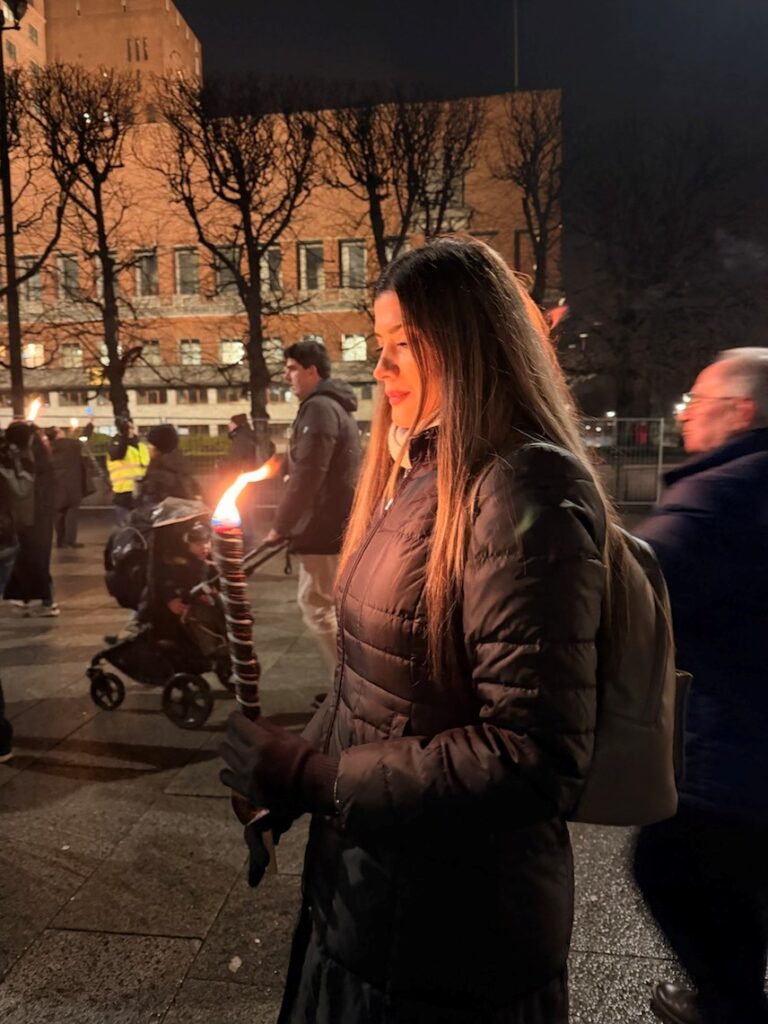
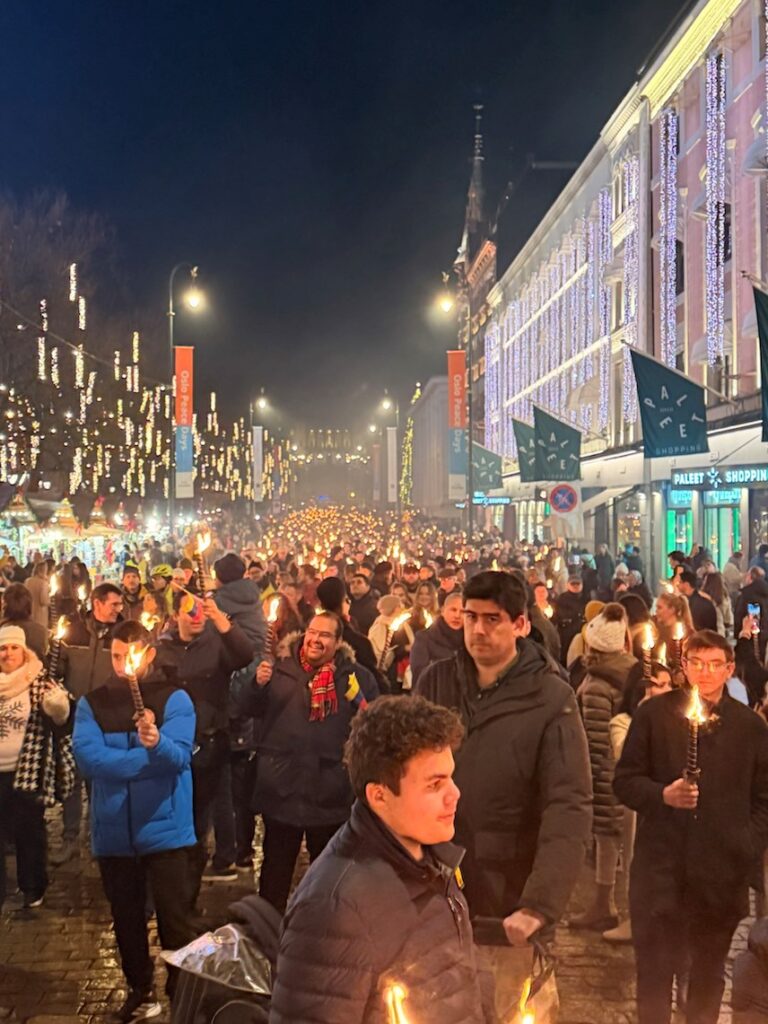
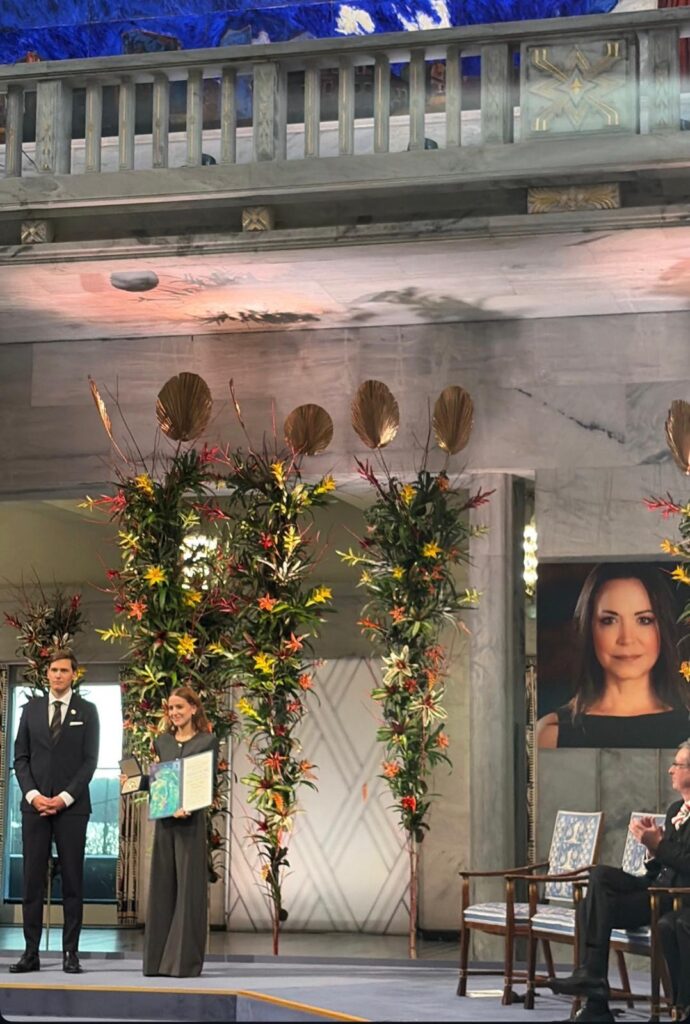
On 10 December 2025, a representative of the YWCA National Capital Area in the USA (YWCA NCA) joined global leaders and advocates in Oslo, Norway, to witness the Nobel Peace Prize ceremony honouring Venezuelan leader María Corina Machado for her unwavering commitment to democracy and human rights. Machado is among a small number of women laureates in the history of the prize and stands in a long line of women whose courage has reshaped public life, including Narges Mohammadi, Nadia Murad, and Malala Yousafzai.
This recognition speaks directly to the lived realities of the women, young women, and girls that YWCA movements support daily, particularly those facing ongoing conflict, violence and displacement. It affirms that the struggles of women human rights defenders, migrants, and democracy advocates are not isolated, but are part of a shared, global demand for freedom and dignity.
Sarah Davila, from YWCA NCA, was invited to attend the 2025 Nobel Peace Prize ceremony in recognition of her extensive and impactful community work launching YWCA NCA’s efforts to support immigrant communities in the Washington, DC region. Since the start of the year, Sarah has worked tirelessly helping more than 1,200 women, girls, and families- many of them Venezuelan- to address the dire impacts of an ongoing political crisis, including family separations and socioeconomic insecurities. Her attendance at the Nobel Peace Prize laureate ceremony and surrounding events was made possible through the generous sponsorship of the Development of Technological Thinking Foundation in recognition of her work with vulnerable immigrant communities.
Sarah Davila, from YWCA NCA at the Nobel Peace Prize Torchlight Procession in Oslo, Norway.Nobel Peace Prize Torchlight Procession in Oslo, Norway.The Nobel Peace Prize ceremony in Oslo, Norway.
In early 2025, YWCA NCA, under Sarah’s leadership, launched Legal Protection & Assistance Workshops to provide practical tools on safety planning, custodial power of attorney, and emergency preparedness, enabling families to better protect their loved ones in volatile circumstances. This work is strengthened through partnerships with organisations such as SAMU First Response, the Guatemalan Consulate, and pro bono legal advocates, who are expanding access to protection, information, and support.
This momentous achievement by a woman Nobel Laureate and the tireless work of YWCA leaders like Sarah, reinforce the World YWCA’s commitment to advocate for the advancement of women’s rights and freedoms across all borders and contexts, as demonstrated by the following 2023 World Council statements:
WOMEN: FOR DECISIVE ACTION FOR WOMEN’S RIGHTS GLOBALLY AND AGAINST THESE ANTI-FEMINIST VOICES:In the past years, rising (political) anti-feminist movements have tried to undermine, suppress or even undo women’s rights and freedoms that have been fought hard for through generations. Therefore, we call for decisive action for women’s rights globally and against these anti-feminist voices. Firstly, women should have equal rights, access to healthcare and education, and be able to choose to exercise their rights to make decisions about their own bodies, sexuality, health, and clothing. This cannot be compromised. Secondly, the international community should prioritise women’s rights. The YWCA should play an active role in the global movement countering anti-feminist backlash. The World YWCA movement will actively engage in educating about feminism to dispel myths and promote gender equality.
WOMEN: AGAINST FEMICIDE AND SEXUAL VIOLENCE AGAINST WOMEN, YOUNG PEOPLE AND GIRLS:In the 21st century, women in Latin America are still vulnerable to sexual violence and murder. The statistics are alarming, and the consequences of this phenomenon are even more devastating: many children are orphaned and remain under the guardianship of the aggressor, who is their own. Further, their lives are submerged in an environment full of violence, and at a young age, they must face and confront the naturalisation of violence; on the other hand, they are condemned to a chain of abuse and rape, where girls must face a complex life enduring sexual violence and unwanted pregnancies. Both phenomena leave their mark on many women and the families they leave behind. This alarming and extremely important phenomenon occurs not only in Latin America but also in other regions of the world. Therefore, it is a duty to work to eliminate femicide and rape.
The YWCA NCA’s mission to empower women and families aligns deeply with Machado’s fight for human rights, dignity, and democratic freedoms. It reflects their ongoing commitment to support immigrant women and families, both locally and globally. By standing alongside movements for democracy and the protection of human rights in Venezuela and around the world, the YWCA NCA in the USA and World YWCA affirm that peace is inseparable from justice and gender equality. The 2025 Nobel Peace Prize ceremony is therefore not only an honour for one leader, but a call to strengthen collective action with and for women, young women, and girls who are creating a more just and peaceful world.
The World YWCA remembers Mary Ann Lundy (1932–2025), a visionary faith leader, feminist theologian, and tireless advocate for justice and equality.
In 2025, through a generous bequest made by her husband, Donald J. Wilson, Mary Ann once again put her convictions into action by supporting the work of the World YWCA. This final act of generosity reflects the same commitment that defined her life’s work: empowering women to lead with compassion, strength, and purpose.
Across her remarkable career, Mary Ann wove together faith, activism, and leadership in pursuit of a more just world. From her early years as a teacher and Presbyterian minister to her global advocacy for women’s rights and peace, she inspired countless others to follow suit.
As World YWCA CEO/General Secretary Casey Harden reflects, “Mary Ann lived her faith through action and with definitive and incorrigible courage and conviction. She lived as though a more just world was inevitable.”
In 1982, Mary Ann became the Director of the National Student Young Women’s Christian Association (YWCA) in the United States, where she championed women’s leadership and helped bridge faith-based and grassroots activism. Her leadership extended beyond the YWCA into the global ecumenical sphere, where she continued to uplift the voices of women within the church and society.
A pioneer of the Sanctuary Movement in the 1980s, she risked personal safety to protect refugees fleeing violence in Central America. Later, as Director of Women’s Ministry in the Presbyterian Church (USA), she chaired the U.S. committee for the Ecumenical Decade: Churches in Solidarity with Women (1983–1993), a landmark global effort aligned with the World Council of Churches. This led to her co-founding the groundbreaking Re-Imagining Conference (1993), which brought together more than 2,200 international delegates. The Re-imagining Conference was named the “most significant religious gathering in 50 years” by the Christian Century and honoured in international religious journals. It was, nevertheless, controversial in several denominations, but especially in Presbyterian circles, due to the forward-thinking views that emerged from the gathering.
In 1995, Mary Ann was appointed Deputy General Secretary of the World Council of Churches, based in Geneva, a role through which she strengthened partnerships between women’s movements, faith communities, and multilateral institutions. While in this position, she travelled extensively, served as liaison to the Ecumenical Institute at Bossey, and chaired the planning for the 1995 World Assembly in Harare, Zimbabwe. Her leadership at the global level built bridges across denominations and generations, opening doors for women’s participation in decision-making and dialogue worldwide.
Mary Ann’s lifelong advocacy for gender equality and peace deeply resonated with the mission of the World YWCA, a movement she served with vision and heart.
We give thanks for the life and legacy of Mary Ann Lundy: a woman of courage, intellect, and unwavering faith. Her voice continues to inspire the generations of women leaders rising within the YWCA movement and beyond.
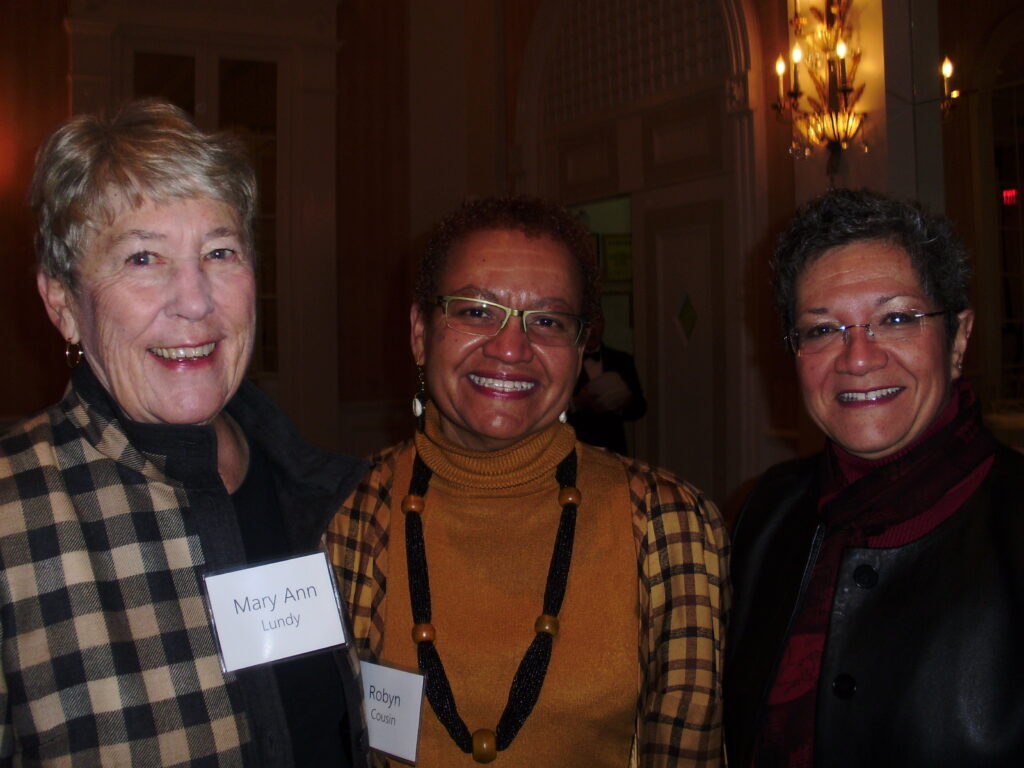
Mary Ann Lundy with Robyn Cousin (middle) and Mercedes Marquez (right) in 2013.
Mary Ann’s story reminds us how one act of generosity can echo for generations. If you would like to explore how your own legacy could support women’s leadership through the World YWCA, please get in touch with us at worldoffice@worldywca.org.
On this International Day of Solidarity with the Palestinian People, the World YWCA and the YWCA of Palestine join all who uphold the dignity, equality, and worth of every human being. Each year, November 29 is a reminder to the world that the violation[A1] of Palestine remains unresolved, and that the pursuit of justice, peace, and freedom continues to call upon the conscience of humanity.
For decades, Palestinian men, women, and children have endured killings, extreme harassment, violence, mobility restrictions, displacement, loss, and dehumanisation. Yet even amid immense suffering, the people of Palestine continue to embody “Sumoud” – resilience, faith, and an unwavering hope to live in dignity and peace. Their struggle is not only a national cause; it is a profoundly human story that reflects a shared yearning for justice and the restoration of human rights.
Today, this call for solidarity comes at a time of unimaginable suffering. Despite repeated announcements of ceasefire efforts, the reality on the ground tells a different story. The killing and destruction have not stopped, and the people of Gaza continue to face one of the most devastating humanitarian crises in modern history. An unimaginable number of entire families have been wiped out, and homes, schools, infrastructure, and hospitals reduced to rubble.
Women and girls are bearing the disproportionate weight of this violence. Beyond the bombardment, we are witnessing the weaponization of gender-based violence as a calculated strategy of war. We are witnessing a total collapse of safety and dignity: mothers are giving birth in rubble without medical care, bearing witness as a generation of children has their lives violently cut short. Reports have documented the systematic destruction of reproductive healthcare facilities and the targeting of maternity wards, acts intended to prevent births and destroy the reproductive future of a people. Furthermore, the use of forced public stripping, sexual harassment, and threats against Palestinian women reveals a deliberate campaign to inflict trauma and crush dignity.
At the same time, Palestinians in the West Bank and East Jerusalem face escalating violence and daily violations: home demolitions, land confiscations, random arrests, movement restrictions, and attacks by settlers under military protection. These systemic acts of oppression are erasing communities and deepening despair. What we are witnessing is a continued genocide under occupation; an assault on human life and dignity that is being lived as the new “normal”. The world must no longer tolerate it.
The repeated failure to secure a permanent ceasefire or hold perpetrators accountable exposes a painful truth: performative expressions of concern and temporary pauses in violence cannot save lives or restore justice. The silence and inaction of the international community only deepen the wound of impunity.
While humanitarian assistance remains vital, it cannot by itself heal the profound injuries of injustice or restore the dignity denied to an entire people. True solidarity must rise beyond aid and sympathy; it must be grounded in moral courage and faith in the sanctity of every human life. As people of conscience, we are called to speak truth to power, to demand accountability, and to act with conviction so that justice is not delayed and peace is not denied.
We are guided by the message of the Kairos Palestine document, a word of faith, hope, and love from the heart of suffering. It calls on all of us, especially those in positions of moral and political authority, to stand firm in compassion, to reject injustice and oppression, and to affirm that every person, regardless of nationality or faith, is created in the image of God and worthy of freedom and peace.
From this place of faith and shared humanity, we appeal to the United Nations and all Member States:
To renew and strengthen efforts to end the ongoing suffering in Palestine, ensuring protection for all Palestinians, and guaranteeing unrestricted humanitarian access.
To uphold international law and all relevant UN resolutions affirming the inalienable rights of the Palestinian people, including the right to self-determination and return to their homes and lands.
To safeguard and sustain the essential work of humanitarian agencies serving Palestinian refugees and communities.
To demand accountability for the gendered violence documented in this crisis, including forced stripping, sexual assault, and the deliberate destruction of the healthcare systems women rely on to give birth and survive.
To advance meaningful diplomatic and political measures that can end the occupation and open a path toward a just and lasting peace, including an immediate arms embargo and economic sanctions.
To ensure the implementation of International Court of Justice decisions, holding perpetrators of war crimes and genocide accountable, and ensuring that no state or leader, whether acting directly or indirectly, escapes responsibility.
Today, before the international community, we also lift our prayers: for the children longing for safety; for the mothers and fathers dreaming of rebuilding their homes; for the young people who still believe in justice; and for the leaders who have the power to choose peace.
We call upon the United Nations to translate its founding values of justice, human rights, and the dignity of every person into concrete action that restores hope and faith in the promise of international solidarity.
As one of the world’s oldest and largest women’s movements, the World YWCA and the YWCA of Palestine reaffirm our unwavering commitment to peace built on justice, equality, dignity, and love. We believe that faith without action is empty, and that hope, when nurtured with courage, can transform even the darkest night into the dawn of a new day.
This Day of Solidarity, we renew our collective determination to see the Palestinian people live in freedom, dignity, safety, and peace, where justice and compassion are our future.
*A shorter version of this statement was read at the UN in Geneva on Friday, 28 November, on behalf of World YWCA – YWCA Palestine.