The World YWCA supports YWCA Korea’s call for the solidarity of Korean citizens, the global movement, partner organisations, and international allies. We join them in urging the Korean government to take action through legal reform, recognition and accountability, and a renewed commitment to justice, peace, and solidarity for the victims of Japanese Military “Comfort Women[1].”
On the occasion of August 14, Memorial Day for the Victims of Japanese Military “Comfort Women”, the National YWCA of Korea shared its statement History Still Unfinished – Act Now:
“…Last year, over 50,000 Korean citizens signed a national petition calling for the amendment of the Act on the Protection of the Victims of Japanese Military Sexual Slavery. Despite this apparent demand, the bill remains pending…Resolving the issue of the Japanese military “comfort women” is no longer a matter of choice. It is a national duty that the government must fulfil. Suppose the state fails to protect the rights and dignity of the victims legally. In that case, the meaning of this Memorial Day and the promises made on the 80th anniversary of Liberation will remain empty words. The National Assembly and the Korean government must stop delaying and immediately move forward with amending the Victim Protection Act, thereby fulfilling their national responsibility to restore the victims’ dignity and justice.
The national YWCA of Korea will continue to raise awareness of this issue and stand in solidarity—on the streets, in educational settings, and the global community- so that victims can speak out freely and restore their dignity. We are committed to building safe and supportive spaces across generations and regions- not only spaces for healing, but also places for sharing historical truths and fostering intergenerational solidarity for peace and human rights…”
YWCA leaders have worked for women’s rights and peace with justice for more than a century, and since the 1995 World YWCA Council in Seoul, Korea, the World YWCA movement has committed to calling on the Japanese Government to acknowledge these atrocities, to issue reparations, and to formally apologise for the crimes committed against thousands of women.
Now, nearly 30 years after that resolution, and more than 50 years since these heinous acts took place, the World YWCA stands firm in its Goal 2035 commitment: to transform power structures, create justice, and demand recognition that violence against women must never be forgotten or allowed to continue. We affirm that a world without violence is possible, led by an inclusive and intergenerational YWCA movement.
[1] From YWCA Korea: the term “Japanese military ‘comfort women’” refers to the hundreds of thousands of women and girls, many from Korea and other parts of Asia, who were forcibly taken and exploited in military-run brothels by the Japanese army before and during World War II. It was a grave violation of human rights and dignity, and many survivors have continued to speak out for justice, an official apology, and legal reparations.
October 3, 2025
Systemic gaslighting*. That is what has been happening in Gaza and continues unabated.
Non-combatants, human rights defenders, and humanitarian aid workers continue to be targeted, obstructed, and silenced. And, doxed, harassed, and violated across cyber boundaries.
These direct violations of all international norms and protections, intended to uphold established global norms and safeguard those helping others in need.
The gaslighting comes as a denial of genocidal behaviour and decisions. The gas lighting comes as the objectification of a whole people, and a narrative that starvation and involuntary death is a natural human condition. The gaslighting comes as strident propaganda from a podium, given voice across markets of communication.
This is gaslighting by power structures.
Wars – most often created by a small number of people that hold power – create humanitarian crises, lead to displacement and impoverishment of millions of people, and birth to generational.
For almost 200 years and today, World YWCA recognises human suffering as antithetical to human rights. World YWCA recognises human suffering as unconscionable and avoidable.
“Every obstruction, every attack, every threat against those bringing aid and bearing witness is a crime under international humanitarian law and must be held accountable. To normalise such actions is a gaslighting of the human community.”
– Casey Harden, CEO/GS World YWCA
World YWCA calls for urgent action and norm reversal, to make the protection of the lives and efforts of non-combatants, human rights defenders, and activists for peace and justice – Sacrosanct.
Since 2023, World YWCA has been calling attacks on Gaza what it is – an act of Genocide. We reinforce:
Ceasefire NOW
Humanitarian corridors to be opened and be safe for all
Diplomatic and legal pressure to prevent further atrocities
*Systemic gaslighting: It is the systemic attempt to make the global community doubt its own moral compass and perception of reality, while grave human rights violations continue in plain sight.
YWCA USA CEO Margaret Mitchell issued a statement in response to the U.S. House of Representatives’ passage of the so-called One Beautiful Bill Act, which passed with a vote of 218-214 along political party lines, and “Sets in motion innumerable transactions that will have negatively transformational consequences”, says World YWCA CEO/GS Casey Harden.
“World YWCA recognises that such partisanship, reflected in the vote on the bill, manifests power structures that have a devastating impact on women. Further, such actions reflect a trending backlash against the rights of people, especially women, in every region of our world,” adds Ms. Harden.
Ms. Mitchell said in her statement, “As the CEO of YWCA USA—an organisation dedicated to advancing equity and supporting more than 190 YWCA Local Associations across 45 states and the District of Columbia—I am deeply disheartened by the U.S. House’s decision to pass a reconciliation bill that so blatantly deprioritises the real, human needs of millions of people across this nation…The consequences of this bill are not abstract. They are real. A child will go to bed hungry. A family will skip a meal to make rent. A senior will go without a life-saving prescription. These are not policy trade-offs—they are human losses.”
She continued with a clarion call, “Where Congress has faltered, YWCA will hold the line—and we will continue to fight for the just and equitable future that all of us deserve.”
The YWCA global movement has maintained its position for almost two centuries. At the recent YWCA World Council, the decision-making body of the global YWCA movement, comprised of community-based leaders worldwide, the following statement was approved to recognise the trending backlash and rising conservatism that erode established rights.
The resolution calls for decisive action for women’s rights globally and against anti-feminist voices: In recent years, rising (political) anti-feminist movements have tried to undermine, suppress, or even undo women’s rights and freedoms that have been fought hard for through generations. Therefore, we call for decisive action for women’s rights globally and against these anti-feminist voices. Firstly, women should have equal rights, access to healthcare and education, and be able to choose to exercise their rights to make decisions about their own bodies, sexuality, health, and clothing. This cannot be compromised. Secondly, the international community should prioritise women’s rights. The YWCA should play an active role in the global movement countering anti-feminist backlash. The World YWCA movement will actively engage in educating about feminism to dispel myths and promote gender equality.
World YWCA joins YWCA USA in decrying the multi-faceted and negative impacts of the so-called One Beautiful Bill Act. The effects of such policies fall hardest on women already facing systemic oppression, especially women of colour, low-income women, and migrant and disabled women. Further, such a bill reflects a congressional power structure that does not serve most citizens, but instead specific partisan or sector interests, having nothing to do with a life of freedom, dignity, and justice for most. We must also name the language of “reform” and “efficiency” for what it is: a rhetorical tool masking ideological harm.
In moments like this, women’s movements must not only condemn injustice but also organise collectively to dismantle the power structures that enable it.
For more information from YWCA USA on H.R.1 or the advocacy work of YWCA USA, contact: Randi Schmidt, Director of Government Relations at rschmidt@ywca.org or Kate Kasper, Vice President of Public Policy and Advocacy at kkasper@ywca.org.
World YWCA stands in solidarity with the YWCA Aotearoa New Zealand’s condemnation of their Government’s decision to dismantle pay equity legislation. For 170 years, YWCAs worldwide have addressed the issue of women making less per dollar for every dollar men earn. The wage gap between women and men is an everlasting reality of gender inequality.
At the 61st Commission on the Status of Women, many complexities of the issue were well stated: “This stubborn inequality in the average wages between men and women persists in all countries and across all sectors, because women’s work is undervalued and women tend to be concentrated in different jobs than men. Even though the work itself may require equal or more effort and skills, it’s valued and remunerated less. For women of colour, immigrant women, and mothers, the gap widens. The so-called “motherhood penalty” pushes women into informal economy, casual and part-time work, and tends to be larger in developing countries than in developed countries.”
World YWCAechoes the board of the YWCA Aotearoa New Zealand in noting that the recent repeal of core provisions of Aotearoa’s pay equity legislation is more than a policy change. It is a rollback of progress, a dismissal of lived realities, and a direct attack on the future of young women and gender-diverse people across the country.
World YWCA calls for solidarity and support of the local and national leadership of YWCA Aotearoa New Zealand’s efforts, including:
Since a formal resolution by the World YWCA Council in 1959, the global YWCA movement has supported the principle of equal remuneration for all people for work of equal value. This principle is key to achieving Sustainable Development Goal 8, especially full employment and decent work with equal pay, which promotes sustained, inclusive, and sustainable economic growth, full and productive employment, and decent work for all.
For further information:
Communications & Engagement – YWCA Aotearoa New Zealand National Board : info@ywca.org.nz
In 1959, in Mexico, the World YWCA Council – comprised of community women leaders around the world – passed a resolution on peace. One part stated:
“World order and a climate of peace cannot be established without the growing desire to develop an international public conscience as sensitive to the existence of world disorder as to that of national disorder. YWCAs with other groups of people within the nations must accept their responsibility to support and stimulate governments in their efforts to promote peace… Peace is not only the absence of war. Fear, want or lack of freedom for the individual or the nation, are all threats to peace. We will therefore continue our work towards removing these threats by taking an ever-growing share in the promotion of human rights and fundamental freedoms, of the respect of the right of peoples and nations to self-determination, of better standards of living for all, and of a freer flow of goods, persons and ideas.”
Poverty, hunger, forced displacement, and lack of shelter and safety accompany fear.
The repeated block by the Israeli Occupation on aid delivery to the people of Gaza, including overt and unnecessary barriers, and more subtle political obfuscation by those in power, is a horrible violation of human rights. In 2025, severe acute malnutrition resulting in sickness and death of thousands, with food and safe water available across a constructed border, is not only wholly unacceptable and a stain on humanity – an offense of trauma, human suffering and death. If the siege is not lifted and food and health supplies are not delivered to Gaza immediately, thousands of more children will inevitably die. We should not stand silent and accept this, as a women’s movement. This is shameful to our core values.
World YWCA recognises human suffering as antithetical to human rights.
Mira Rizeq, World YWCA President states, “Our struggle to stop arm production and trade should be intensified if we are true in our mission of saving humanity. “Through the decades of its work, the YWCA global movement has recognised weapons and arms production as an accelerator to human suffering.
World YWCA calls for all YWCA associations and leaders, and every citizen of the world, to act and denounce the human suffering in Gaza, and pressure for an immediate correction of such a horrific assault on fundamental peace and freedoms.
Statements linking to Peace in Middle East: Page 88, Statement approved and passed at the 1975 World Council in Vancouver, Canada: Peace: Middle East; Page 89, Resolution approved and passed at the 1983 World Council in Singapore: Peace: Middle East; Page 93, Resolution approved and passed at the 1991 World Council in Stavanger, Norway: Peace: Palestine; Page 95, Resolution approved and passed at the 1995 World Council in Seoul, Korea: Peace: Middle East; Page 95, Resolution approved and passed at the 1999 World Council in Cairo, Egypt: Peace: Middle East; Page 95, Resolution approved and passed at the 2003 World Council in Brisbane, Australia: Peace: Middle East; Page 96, Resolution approved and passed at the 2007 World Council in Nairobi, Kenya: Peace: Middle East; Page 97, Call to Action approved and passed at the 2015 World Council in Bangkok, Thailand: Peace: HR STANDARDS AND UNSCR 1325 MIDDLE EAST
Research Insights to Intergenerational Leadership Practice
Not mentorship. Not hierarchy. Shared power. Shared leadership. Intergenerational YWCA.
Across a world shaped by persistent injustice, urgent crises, and shrinking civic space, women, young women, and girls are rising—together. As the World YWCA moves boldly toward Goal 2035—where 100 million young women and girls transform power structures to create justice, gender equality, and a world free from violence and war—we know that how we lead is as important as what we do. That future demands a shift: from transactional leadership to transformational, intergenerational leadership (IGL).
This report presents the findings of a global, co-created research journey by World YWCA and One Future Collective to lay the groundwork for a tool that enables feminist civil society organisations to practice, assess, and strengthen intergenerational leadership in all its richness and complexity.
At its core, IGL is not about age—it’s about agency, shared power, and accountability across generations. It resists the binary of ‘young’ and ‘old’, and instead cultivates leadership as a collective ecosystem—rooted in mutuality, co-creation, and a redistribution of power. It celebrates what happens when generations lead with each other, not just after or in place of one another. This work is not new to the YWCA movement. Rooted in over a century of global leadership, the commitment to intergenerational leadership was renewed and reaffirmed at the World YWCA Council meetings in 2011 (Zurich) and 2015 (Bangkok)—moments that shaped our recent Strategic Frameworks (2020-2023) and (2024-2027) and clarified the centrality of intergenerational leadership to our collective vision for transformation.
The process of developing this tool began with an extensive literature review followed by a landscape analysis of existing models of intergenerational leadership. Guided by the Feminist Consultation Methodology, this research engaged over 100 participants from across the globe through surveys, focus groups, interviews, and a co-design lab. What emerged was clear: IGL is already alive in stories, struggles, and spaces—but it is often informal, unrecognised, or unsupported. There is a hunger for tangible tools, shared language, and intentional practices that make IGL real and sustainable in organisational settings. This guide is not exhaustive. It reflects YWCA’s rooted expertise and those most aligned with our intergenerational practice. As it is used globally, we will continue to build on this research—expanding voices, models, and perspectives across sectors and identities.
Read the literature review and research report here.
At the World YWCA, we believe that leadership must be shared to be just. It must be intergenerational to be lasting. And, it must be authentic and accountable to be transformative. We are living in a time that demands bold imagination and collective courage. In and across every corner of the world, young women, girls, and women of all generations reimagining systems of power.
People are looking for just, lasting and transformative changes in power structures. We heard this for years, from all sectors, genders, and identities that witnessed YWCA working intergenerationally. So, we decided to try to capture that in a guide. Something liberating. Something dynamic and not transactional. Something for most, not few.
Something useful and authentic for those aspiring for intergenerational leadership, beyond afterthoughts, tokenism, disastrous best-faith attempts, avoidance, scepticism, or performance. As one of the longest-standing, intergenerational movements, YWCA knows the imperative of adaptation and evolution to realize justice for all. YWCA has done our work through conflict, peace, crisis, and resolution.
This tool, The Intergenerational Triangle, is both a reflection of the YWCA movement’s history and a bold offering to the future. It was shaped through global conversations with hundreds of feminist leaders, co-designers, and community voices, including questions, hopes, tensions, and truths. This resource is for leaders in the non profit, for profit, public, private, UN member states, faith, philanthropic, recreational, academic, government and other sectors committed to the wisdom of intergenerational leadership.
It draws from different settings, cultures, communities, and realities, and the parallel shared expertise, histories, and years of practice nurturing inclusive leadership across generations.
The development and implementation of tools which facilitate the practice of intergenerational leadership (IGL) is a key priority for the World Young Women’s Christian Association’s (World YWCA) strategic priority for the years 2020-2023 and 2024-2027. In this background, World YWCA has partnered with One Future Collective to design an evidence-based tool to encourage and support civil society organisations to practise intergenerational leadership in their contexts. A key exploration as a part of this partnership has been to build a tool which captures ways and methods by which IGL can be embedded into the organisations’ ethos and the personal practice of leaders within the civil society ecosystem around the world.
The process of developing this tool began with an extensive literature review followed by a landscape analysis of existing models of intergenerational leadership. To ensure that the tool we developed responded particularly to the needs and experiences of leaders within global feminist civil society, the second phase of developing this tool involved primary stakeholder consultation using the World YWCA Feminist Consultation Methodology. Through this process, we engaged various stakeholders via different formats, such as interviews, focus group discussions and surveys to gather information on different facets of IGL. Once the first iteration of the tool was developed, we wanted to test the tool for its applicability and usage. We adopted a multi-step process, including a survey-based review of the tool and research report with civil society leaders and organisations. In addition to this, we also conducted micro tests of different segments of the tool with different organisations to assess its real time application. This tool is a culmination of these processes and hopes to set in motion a collective and transformative journey for the feminist civil society ecosystem towards the adoption and practice of intergenerational leadership. The tool brings to life two structural frames for the learning and growth around intergenerational leadership – a triangle approach that helps intersect guiding principles, building blocks and archetypes; and a self-audit tool helps assess where we are at with our IGL Journeys and how we can make progress.
We are always eager to support organisations along their journey towards practising intergenerational leadership. If you would like to know more about this tool or would like to provide feedback, please reach out to us at worldoffice@worldywca.org.
Young people have always been a powerful force for innovation, collaboration, and progress, and your efforts continue to create meaningful impacts within your communities. We believe in the power of young people from all walks of life, backgrounds, and abilities. Every community is unique, and the most effective solutions emerge from within. Our strength lies in your lived experiences, resilience, and vision for a better future. You are a powerful force for change, and you, in turn, have risen to meet those challenges with determination, creativity, and an unwavering belief in the possibility of change.
We, the executive directors of the Big Six—an alliance of leading international youth-serving organisations—are speaking directly to you during this time of rapid change, which includes a possible reduction in financial flows of international cooperation but also represents an opportunity to adapt quickly, innovate, build resilience and further empower young people around the world. Changes in the external environment may reduce our capacity to deliver crucial services, but not our ambitions to fulfil our respective institutional mandates. We want you to hear this clearly: We see you, we hear you, and we are with you during thistime.
Our mission together remains as strong as ever—enabling local communities and amplifying young people’s voices and leadership. We are dedicated to young people’s access to tools, networks, and opportunities to bring visions, missions, ideas, and actions to life. We aim to champion youth-led initiatives, nurture leadership, and create spaces where young people thrive. We will continue to advocate for and with young people at the highest levels.
Non-formal education and volunteering are potent ways for young people to build skills, confidence, and lasting connections. We know from the hugely impactful work of our network of member or national organisations in over 190 countries that these experiences help develop leaders and provide opportunities to contribute meaningfully to communities. Through our unique model of millions of hard-working volunteers in every local community, they ensure that young people’s voices shape the solutions guiding our collective future.
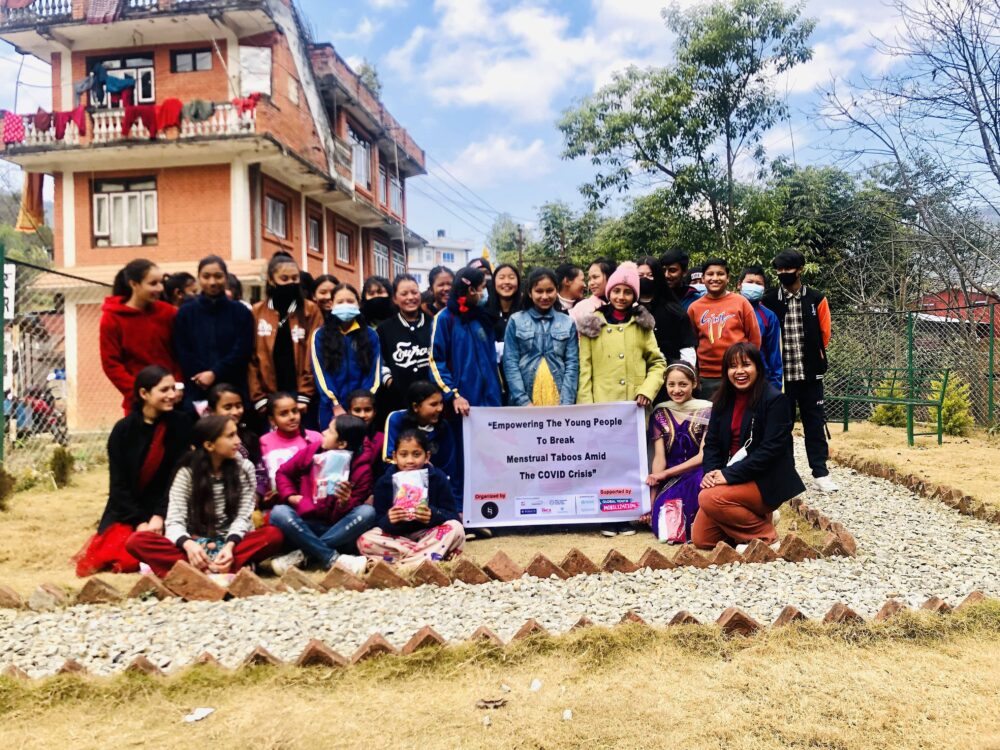
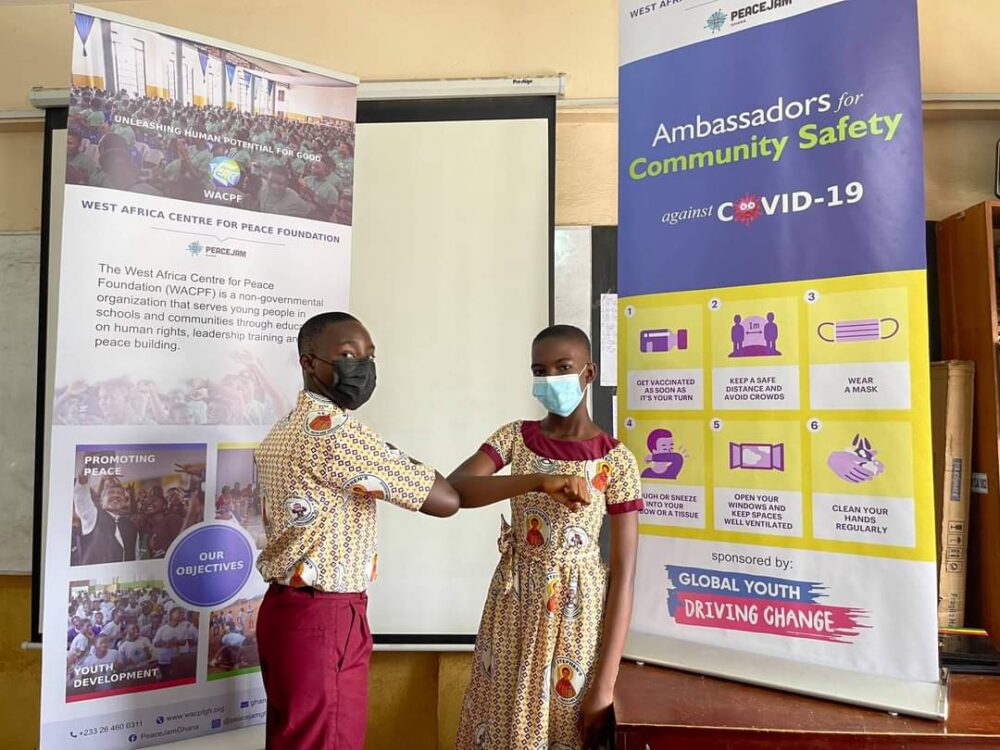
Our joint initiative, The Global Youth Mobilization (GYM), has young people leading projects that foster positive change in communities. This youth-driven effort has created new and needed ways for young leaders to contribute to decisions that affect their lives and have the resources to lead.
Since its inception during the COVID pandemic, the GYM has been designed to dismantle barriers to funding and provide hard-to-find opportunities for mentoring, coaching, and capacity building. It has been designed to ensure equitable access to resources for marginalised and underrepresented peoples and communities.
Now, in partnership with the European Commission Directorate-General for International Partnerships, GYM continues to expand its reach, offering accessible funding, mentoring, and resources to support youth-led local projects. Launched in October 2023, the €10 million initiative, called The Youth Empowerment Fund, provides youth-friendly funding for projects that contribute to the sustainable development of local communities.
The second funding cycle launched on March 3rd, and we encourage you to apply, bringing forward ideas that will strengthen and uplift your communities and address new gaps created by this burgeoning global funding crisis.
The future is bright, and it still belongs to you. We trust your capacity to turn the tide, create change, and lead with courage. Your leadership is needed now more than ever. The future is yours; we know you need resources to make it.
With unwavering support and solidarity,
Casey Harden, General Secretary, CEO/World YWCA
Carlos Sanvee, Secretary General, World YMCA
Xavier Castellanos, Under Secretary General (NSDC), International Federation of Red Cross and Red Crescent Societies
Martin Houghton-Brown, Secretary General, The Duke of Edinburgh’s International Award Foundation
Guy Holloway, Acting Chief Executive, World Association of Girl Guides and Girl Scouts
David Berg, Acting Secretary General, World Scouting
March 19, 2025
The World YWCA, a global movement of hundreds of thousands of women, has provided leadership in conflict and post-conflict spaces for over a century and advocates for peace and justice in communities, countries, regions, and the world. YWCA leaders from conflict-affected communities share their witness and expertise directly with the world’s citizens, always an effective tool for peace with justice.
Read the following witness and appeal from the leaders of the YWCA DRC (translated from French into English):
“Our country is going through very difficult times in the face of its destiny!
Since 27 January 2025, the Democratic Republic of Congo has been experiencing a bloody and atrocious political crisis due to the presence of rebel troops in the eastern part of the country. This has caused panic, desolation, and massive displacement of the population, resulting in a significant loss of human life, with an estimated death toll of almost three thousand, according to the dramatic and still provisional report issued by the United Nations on Tuesday, 4 February 2025.
Reports from humanitarian organizations working in the area show a flood of people leaving Goma, Bukavu, and Uvira, and other surrounding areas: women, children, elderly people, and men carrying bundles of goods. Their story is of fear and uncertainty; every step is a call to survival. For the people of eastern DRC, this is not the first time that these communities have left their homes and residences to escape the violence. Before the fierce armed clashes at the end of January 2025, almost 5.1 million people had already been displaced in the provinces of North Kivu, South Kivu, and Ituri. The occupation of Goma by armed rebels has worsened the situation, adding to the toll of these clashes and the increase in the number of internally displaced people. This time, the scale of displacement and suffering is staggering and alarming. The living conditions of the displaced are disastrous, with women and girls particularly at risk in a context where rape is used as a weapon of war.
Unfortunately, this open-air banditry is causing a great deal of damage, including the destruction of the ecosystem and the environment, human rights violations, repeated armed conflicts, incursions, and the loss of life. There are rapes and violence against women and girls; famine and malnutrition, especially among small children; and poverty accentuated by difficulties in accessing the most basic social services. The population’s wandering is caused by their displacement from their places of origin due to the recurring clashes and insecurity.
The YWCA RDC has three YWCA branches in this region: in North Kivu and, more precisely, Goma and Walikale. In South Kivu, in the town of Bukavu. At present, the security situation for women and children is alarming because this rebellion has already made its mark. Given the worsening security situation in Eastern DRC, with the risk of the entire Great Lake region and its neighbours (9 countries surrounding the DRC) going up in flames, urgent action for peace is needed.
The YWCA DRC is aware of the positive influence of the World YWCA in the world thanks to its attachment to Christian values and its vision of an inclusive world where peace, justice, and the protection of the environment prevail thanks to women’s leadership.
The YWCA DRC appeals for solidarity for peace in the Democratic Republic of Congo and requests the following:
The holding of a chain of prayers once a week for peace in the Democratic Republic of Congo and the protection of the members of the YWCA DRC,
A co-statement from the World YWCA and YWCA DRC in the form of an appeal for action and global solidarity for peace in the Democratic Republic of Congo to be sent to the Economic and Social Council of the United Nations, as well as to the Commission on the Status of Women (CSW69), the Human Rights Council, the European Parliament and international organisations working on peace issues in conflict zones. YWCA national member associations are encouraged to take similar actions.
Support for the actions that the YWCA DRC intends to carry out as part of the search for peace and solidarity for a lasting solution to this conflict involving the YWCAs of every continent.
Technical, logistical, and financial support to the YWCA DRC to organise monitoring in these conflict zones so that the YWCA branches can provide general humanitarian aid for women and children.”
The World YWCA stands in solidarity with the women of the Democratic Republic of Congo (DRC) and encourages all people to take action in solidarity toward a peaceful and sustained resolution to the current crisis.
To contact the YWCA DRC directly, please email: ywcardc@yahoo.fr.
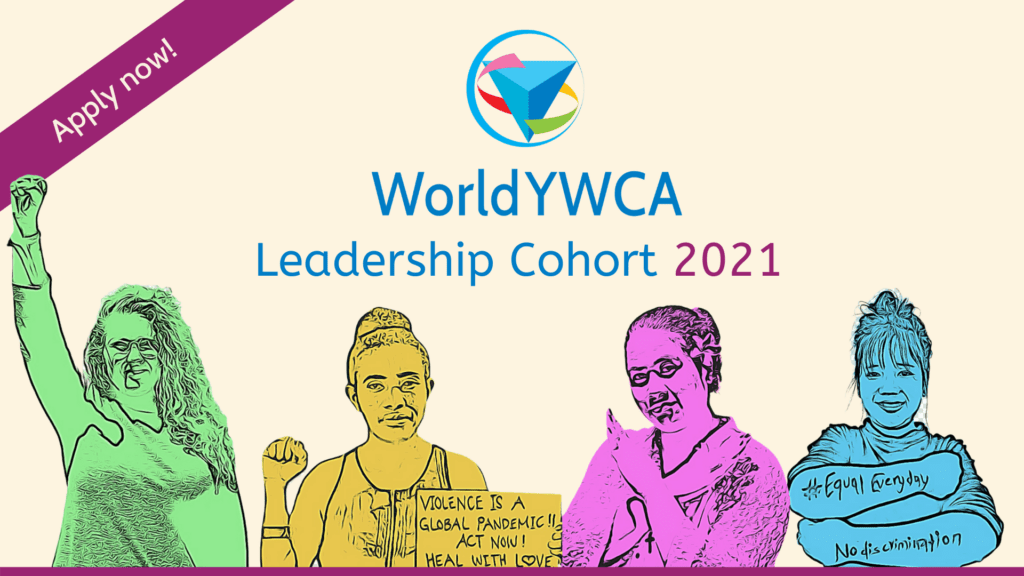
We are pleased to announce that the Young Women Leadership Cohort Programme 2021 is now open for applications! This year’s programme will provide an opportunity for up to ten young women from the YWCA movement to experience the international community-building, work and reach of the World YWCA. Building on the programme’s success and learnings in 2020, and considering ongoing restrictions with the COVID-19 pandemic, the World YWCA Young Women Leadership Cohort 2021 will again occur virtually with World YWCA and at a local or national YWCA member association (also called a “host association”) that has the capacity to support a leadership cohort member (also called an “intern”) throughout the duration of the programme.
The Leadership Cohort 2021 programme will take place from 20 September to 17 December 2021, beginning and ending remotely in the interns’ host association country (or another country, as applicable).
Who can apply: Young women between the ages of 18-30 years old by the time of application, and that are actively involved in a local or national YWCA.
How to apply?
Click the buttons below to download and read the Call for Applications, the Host Association Terms of Reference, and the Application Form for this year. All information regarding criteria for selection and steps to apply may be found in these documents. Note that applications must include a signed endorsement letter in English, French, or Spanish from a local or national YWCA association supporting the application to the cohort programme and stating their willingness to serve as a host association.
Deadline to submit applications:Friday, 6 August 2021; 11:59 PM (Geneva time).
We highly encourage young women from Eastern Europe, the Caribbean, and Latin America regions to apply.